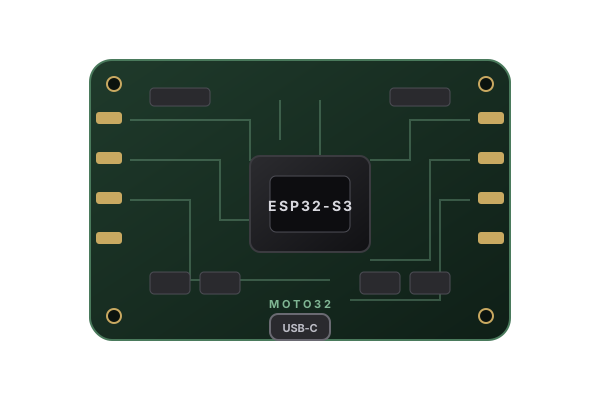
Why Keero Bot Is An AI ESP32 Device
Keero Bot is a modular ESP32-S3 AI device, not just a robotics shell: audio, behavior, firmware, modules, and interaction design are treated as one product.

Keero Bot is best described as an AI ESP32 device because the hardware and behavior model are designed together. It is not only a board, not only a robot, and not only a voice demo.
The useful part is the system: local audio paths, expressive state logic, firmware architecture, and module expansion that can keep growing without turning into a tangled prototype.
Why ESP32-S3
ESP32-S3 gives the platform a practical base for embedded interaction work: enough compute for responsive device behavior, a familiar firmware ecosystem, and room for audio and peripheral expansion.
That makes it a good core for a product that needs to feel alive but still be understandable on the bench.
The Product Layer
Keero Bot is shaped around repeatable modules: audio, sensing, display paths, camera support, motion ideas, docks, and future expansion.
The goal is not to make a flashy one-off demo. The goal is to make a small AI hardware platform that can be iterated, documented, and actually used.